11 clubs, two groups
Six teams in the East and five in the West. They play home and away within their group, then face clubs from the other group before playoffs decide the final places.
MATSU’S NOTEBOOK · 2026/27
Academy football is only part of the story. What happens when the kids grow up and the jump to the first team suddenly looks rather big?
Im following the new U-21 J.League to find out. New names, different pathways and a few players who might make us look very clever for noticing them early.
By Matsu · Last updated
Meet the players ↓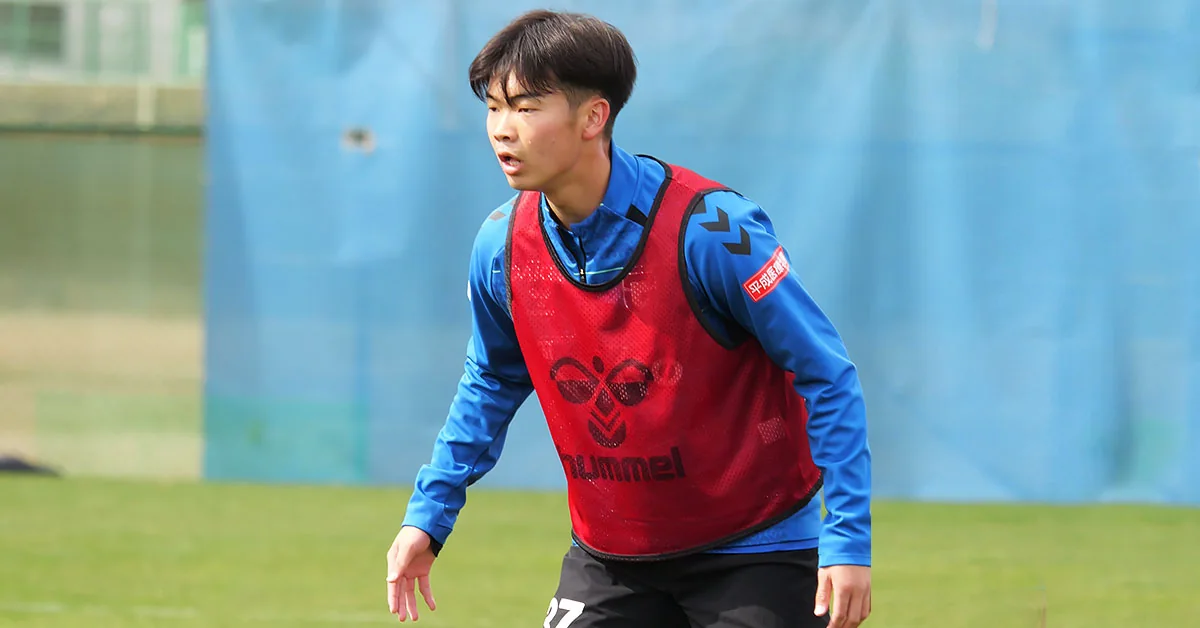
THE QUICK GUIDE
A place for young players to play meaningful football between the academy and the senior game. Simple idea. Pretty important gap to fill.
Six teams in the East and five in the West. They play home and away within their group, then face clubs from the other group before playoffs decide the final places.
Built around players aged 19 to 21, with younger academy players eligible too. Older players can also feature under over-age allowances, so a familiar senior name isnt necessarily a mistake.
The first season began in August 2026, with the final planned around the third week of April 2027. There is a winter break from late December to mid-February.
The league says every match is streamed live on DAZN. Availability can depend on where you live. For fixtures, results and highlights, visit the official U-21 J.League page ↗.
PLAYERS ON MY RADAR
A watchlist, not a promise that everyone here will become a superstar. The facts come from club and league reporting. The bits I want to watch next are my own questions.

His goal against Tokyo Verdy won the league’s October best play award. Ritsu Doan picked out the quick restart, close control and touch to open the shooting angle.
Frontale describe his left-footed technique and ability to cover ground as strengths. Im interested in how often he can get on the ball and connect moves higher up.
Yamaichi is 22 and plays under the first season’s over-age rules.
October best play ↗
Otani scored twice in a 3–1 win over Shimizu in October. FC Tokyo describe the 191cm forward’s hold-up play, aerial strength and runs behind as part of his game.
A big frame and a willingness to threaten the space behind. Thats a combination I want to see more of.

The 194cm goalkeeper joined Kobe from Fukuchiyama Seibi High School. The J.League has highlighted his reach, handling of crosses and shot-stopping.
He started out as a forward in Nigeria. A different route into goalkeeping and a good reason to keep an eye on his development at Kobe.

The Gamba academy graduate scored twice against Kobe in September and has already appeared in J1. The club lists him as a left-footed forward.
He has spoken about studying Sergio Agüero. Id like to see how he finds shooting space against different defences as he moves between the U-21s and senior football.

Born in May 2010, Fukaya has started and completed U-21 matches for Nagoya and appeared in the Levain Cup.
Playing full matches in midfield at 16 is a proper challenge. Ill be watching how he handles the pace of the game and develops alongside older players.
THIS IS JUST THE START
Ill add players, scouting observations and updates as I follow the competition. Some will already be around their first teams. Others might take a little longer to appear on the radar. Thats part of the fun.
Competition format and dates: J.League competition guide. Streaming: J.League DAZN announcement. Match records: Otani and Nakatsumi. Yamaichi: Kawasaki profile. Image: Naru Nakatsumi in training, from Gamba Osaka’s player feature.